


A must-read
Fish. A generic term for many species many of which are heavily threatened by overfishing practices and pollution.
Whether you eat animals from the sea or not, you have to read Bottomfeeder .
Its author, Montreal-based Taras Grescoe, likes to investigate his subject thoroughly before couching his findings and thoughts down for us to read. Much to our enjoyment because his style is like no other. Much to our chagrin, because the topic at hand is rather alarming. Many chapters will leave you stunned, just like the fish caught using dynamite, a practice otherwise called blast-fishing.
The Montreal Gazette described
Bottomfeeder as “a much-needed wake-up call and education notonly for ethically-minded seafood lovers, but chefs, waiters, fishmongers, food writers and home cooks – in short, all consumers.”
If you don’t know how the fish sticks or sashimi landed in your plate, read Bottomfeeder . If the terms ‘bottom-trawling’ and ‘long-liners’ evoke a vague idea in your mind, read Bottomfeeder .
If you think $4.99 is the only price tag attached to a pound of frozen shrimps in your supermarket, think again and next time you enjoy a plate of shrimp remember the list of ingredients which will come along for the ride:
- diesel to kill insect larvae at the surface of the fish pond; (and you thought it was only meant for your truck);
- piscicides (to poison any other competing aquatic life in the shrimp pond) such as chlorine and rotenone, the latter being strongly linked to Parkinson’s disease;
- antibiotics used to prevent disease in the shrimp; those are carcinogenic.
Commonly used agents after shrimp harvesting:
- sodium tripolyphosphate (STPP) is used to soak shrimps (and scallops) to prevent dessication and enhance product weight during transit. STTP is a suspected neurotoxicant.
- borax is used to preserve colour in the shrimp; (ever heard of rat poison?)
- caustic soda is sometimes used for the same reason (yes, that is the same agent used as a drain cleaner)
Shrimp cocktail anyone?
So, here is what you can do, easy as 1, 2, 3:
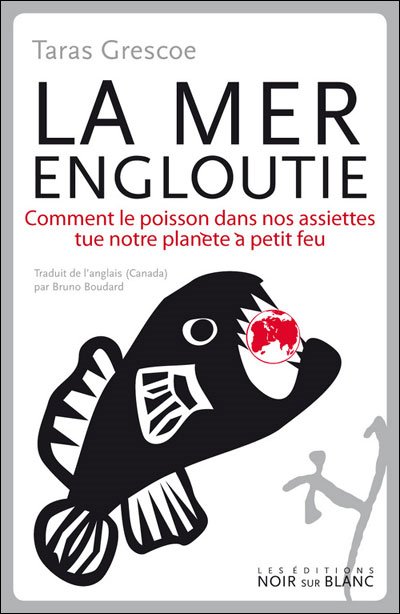
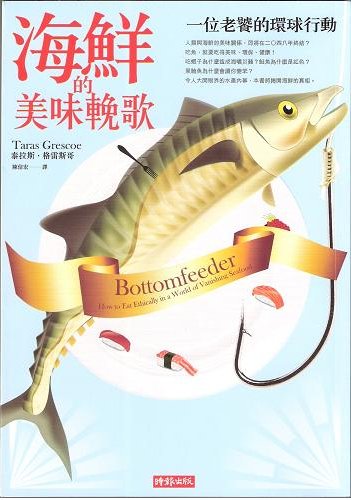
1. read Bottomfeeder ; the book is available in French (La Mer Engloutie – “The Lost Sea”), German (Der letzte Fish im Netz – “The last fish in the net”) and in traditional Chinese characters (Hai xian dì mei wèi wan ge – “The delicious seafood elegy”); hopefully, it will get translated in Japanese soon.
2. perouse the following websites to find out the current recommendations around fish consumption and why:
- SeaChoice (Canadian guide) which has published an easy to download alert card.
- Marine Stewardship Council which details a growing list of sustainable fisheries.
- Fish Base, an incredible database of all fish names, where you will also find seafood guidesfor different countries.
- World Conservation Union, a searchable database to check on the status of marine species.
- Got Mercury, an easy-to-use calculator to find out how much mercury is in your seafood.
You will be surprised.
3. and of course:
- tell a friend;
- parlez-en autour de vous;
- reden Sie darüber;